The course · Seeing color · Lesson 5 of 6 · 26 min
Two colors can match in the shop and part by the window
After this lesson you can say when a match between two garments is real and when it depends on the light. You can also name the two reference lights and say what a client should check before she buys a pair.
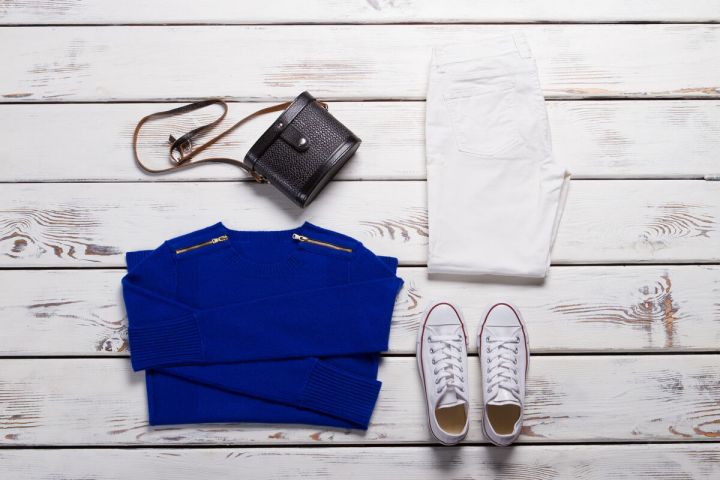
A jacket and trousers that match under the shop lamps can part by the window.
The pair looked like one color in the store. Outside, on an overcast morning, the trousers read slightly greener than the jacket. Nothing about the cloth changed on the walk home. The light changed, and the two fabrics did not respond to it in the same way.
A metameric pair is two colors that match under one light and differ under another.
Two specimens are metameric when they match under a stated light and observer even though their spectra differ. The match holds only under those conditions. Change the light, and a pair that matched can come apart.
The cause is that the two fabrics reflect light differently, so each reacts to a new light in its own way.
Datacolor defines a metameric pair as objects with different spectral reflectance that match under at least one light and observer, and fail under another. Textile samples behave this way. Two cloths can look identical in one light because of how their reflectance adds up, not because they are the same dye.
Light is part of the color, and the reference lights are D65 at about 6,500 K and A at about 2,856 K.
D65 is representative average daylight, and illuminant A is typical tungsten light. A fluorescent lamp such as FL11 is a spectral model of its own, with peaks that daylight does not have. A pair can read differently under each, so one warm lamp does not settle a match.
Metamerism always involves a pair, so one swatch alone can show neither a match nor a mismatch.
Datacolor states the rule plainly: metamerism always involves a pair of objects. A single swatch has no partner to match or part from. Every check compares two samples under one stated light, then again under a second.
Two people with normal color vision can disagree about a match, because observers are not identical.
This is observer metamerism. A pair can match for the standard observer and still differ for a real person with normal color vision, because individual responses are not the same as the standard. A match that passes for one wearer can fail for her neighbor.
A client who wears a pair by a north window and at evening dinners checks it in both lights.
Step one, view the jacket and trousers by the window, in daylight. Step two, view them again under a warm lamp like the one at dinner. Step three, if they match in both, say so. If they part in either, tell her which light splits them, and write both lights beside the result.
The method counts a garment match only when it holds under D65 and under illuminant A.
A color number is incomplete unless its light, observer and setup are named, and a metamerism index states how far a pair drifts when the light or observer changes. So a match is recorded with both lights beside it. A match without its lights is not a reading.
Figure
An illustration, not a measurement. The two fabrics in each row are drawn to match under the warm lamp and to part under daylight. The numbers show the effect and are not read from a sample.
In their words
“Metamerism always involves a pair of objects.”
Datacolor, Understanding Metamerism
Check
Think of the jacket and trousers in the first card. What changed between the shop and the window?
Show the answer
B. The light the pair was seen in
The cloth stayed the same. The pair matched under one light and parted under another, which is what makes it metameric.
Practice
A scarf and a bag matched under warm shop bulbs and split on a cloudy street. The client asks what changed. What do you tell her?
Show the answer
B. The light changed, and the two fabrics respond differently
The light is the dimension that differs. A pair with different spectral reflectance can match under one light and part under another. Fading and a change in her eyes are not needed to explain it, and the pair were never one color.
A sample card says only that two fabrics match. No light is named. How do you read it?
Show the answer
A. As incomplete, since a match needs its light and observer
A color result is incomplete unless its light, observer and setup are named. A card with none of those cannot be read as a match under every light. It is not a mismatch either, only an unfinished reading.
A client and her sister, both with normal color vision, disagree about a jacket and skirt under the same lamp. What explains it?
Show the answer
D. Observer metamerism, since real observers differ from the standard
The viewer is the dimension that differs, with light held fixed. Real observers with normal color vision are not identical to the standard observer, so a pair can match for one and part for another. The lamp did not change.
A buyer holds one swatch and asks whether it is metameric. What is the sound reply?
Show the answer
C. It cannot be said; metamerism needs a pair
Metamerism always involves a pair of objects, so one swatch has no partner to match or part from. Brightness and dye type do not change that, and a single swatch is not stable under every light either.
A client will wear a dress and a jacket by day and at evening dinners. By window daylight they match. Under a warm lamp they part. What do you record?
Show the answer
B. Both lights, and that the pair parts under the lamp
A garment match counts only when it holds under two lights, daylight at D65 and warm light like illuminant A. This pair fails the second, so both results are written down. One light alone does not make a match.
Pair A matches under a warm lamp and parts in daylight. Pair B matches under both. Which pair can you recommend for day and evening?
Show the answer
D. Pair B, since it holds under both lights
The pairs differ in how many lights they hold under. Pair B holds under both. Pair A holds under only one, and no one light counts alone. Some pairs do hold in two lights.
Case study 5
A client buys a navy jacket and trousers that match under the shop's cool lamps. She wears them by a north window and at evening dinners.
Say what you check before she buys, what you record, and what you say if the pair parts in one light.
Show the worked answer
Step 1: a match depends on the light, so view the pair by the window, in daylight. Step 2: view it again under a warm lamp like the dinner light. Step 3: record both lights beside the result. Step 4: if the pair parts in either, tell her which light splits it, since a match without its lights is not a reading.